





If your scalp feels itchy, greasy, “gunky,” or you’re noticing flakes that don’t improve, you may be dealing with scalp buildup—a mix of oil (sebum), sweat, dead skin, hair products, and environmental residue.
The good news: in most cases, buildup is manageable with the right wash routine and gentle scalp care. Below you’ll learn the signs, common causes, and a safe step-by-step plan to remove buildup without over-stripping your scalp.
Educational content only. If you have scalp pain, oozing, thick plaques, sudden hair loss, or severe itching, consider seeing a dermatologist.
What Is Scalp Buildup?
Scalp buildup happens when the scalp isn’t being fully cleansed or balanced for your lifestyle and products. Over time, layers can accumulate from:
- hair oils and butters
- leave-ins, gels, edge control, dry shampoo
- sweat and pollution
- dead skin cells
- hard-water minerals
Buildup can make your scalp feel uncomfortable and can also make your hair look dull or weighed down.
Signs You May Have Scalp Buildup
You might have buildup if you notice:
- itchiness that improves after washing but returns quickly
- greasy roots even soon after washing
- flakes that look white/yellow and stick to the scalp
- tight or “dirty” scalp feeling
- product pilling (little rolls of product when you scratch)
- odor that returns quickly
- hair feels coated, heavy, or not absorbing moisture well
Buildup vs. dandruff vs. dry scalp (quick note)
These can look similar, but they’re not the same. Dandruff often involves an oily scalp + irritation, while dry scalp is more about dryness and small flakes.
What Causes Scalp Buildup? (Most Common Reasons)
1) Heavy products or layering
Common culprits:
- oils/butters applied frequently to the scalp
- dry shampoo used repeatedly without washing
- gels/creams applied directly to the roots
2) Not washing often enough for your scalp type
Some scalps need more frequent cleansing—especially if you sweat a lot, wear wigs/extensions, or use styling products.
3) Hard water
Hard water can leave mineral residue that makes hair feel rough or coated and may contribute to buildup.
4) Over-washing / harsh washing (yes, this too)
If your shampoo is too harsh or you scrub aggressively, the scalp can become irritated and produce more oil—creating a cycle.
5) Skin conditions
Seborrheic dermatitis, psoriasis, and eczema can mimic or worsen buildup. If your flaking is persistent or severe, professional guidance helps.
How to Remove Scalp Buildup Safely (Step-by-Step)
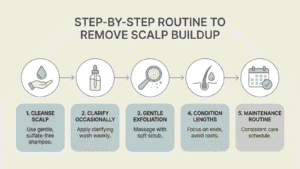
This routine removes buildup while protecting your scalp barrier.
Step 1: Do a proper cleanse (technique matters)
- Thoroughly wet hair and scalp for 1–2 minutes.
- Apply shampoo to the scalp (not just the hair).
- Massage gently with fingertips for 60–90 seconds.
- Rinse very well.
Tip: If you use heavy stylers, a double cleanse (shampoo twice) is often more effective than using a huge amount once.
- Shop Scalp Cleanser / Shampoo
Step 2: Clarify (only as needed)
A clarifying shampoo can help remove stubborn buildup from:
- oils/butters
- silicones
- dry shampoo
- mineral residue
How often? Many people do best clarifying every 2–4 weeks, but it depends on hair type, styling habits, and scalp sensitivity.
Avoid overdoing it: Too frequent clarifying can leave the scalp tight or irritated.
Step 3: Use a scalp exfoliant (optional, gentle)
There are two main types:
- Chemical exfoliants (often gentler): ingredients like salicylic acid (BHA) or glycolic/lactic acid (AHA) in scalp products
- Physical scrubs: can help some people, but can irritate sensitive scalps if too gritty or used aggressively
If you’re prone to irritation, choose a gentle chemical exfoliant and follow directions.
Step 4: Condition the lengths (not the scalp)
Apply conditioner from mid-lengths to ends, unless your conditioner is specifically designed for scalp use.
Step 5: Reset your routine for prevention
To prevent buildup from returning quickly:
- reduce heavy scalp oiling (or apply oil mainly to lengths)
- avoid stacking many products on the scalp
- wash after heavy sweating when possible
- keep protective styles clean (and don’t leave them in too long without cleansing the scalp)
How to Tell If You Removed the Buildup
Signs your scalp is improving:
- less itch and less “coated” feeling at the roots
- hair looks lighter and lifts better
- products absorb more normally
- flakes decrease over 1–2 wash cycles
If your symptoms persist despite routine changes, it may not be simple buildup (or there may be a scalp condition that needs targeted care).
Best Routine Examples (by scalp type)
If you have an oily scalp
- Regular shampoo: 2–4x/week (as needed)
- Clarify: every 2–4 weeks
- Avoid heavy scalp oils and thick butters on the roots
If you have a dry or sensitive scalp
- Gentle shampoo: 1–3x/week (as tolerated)
- Clarify: less often (e.g., every 4–6 weeks) and follow with hydration
- Avoid harsh scrubbing and high-fragrance products
If you use lots of styling products or dry shampoo
- Double cleanse on wash day
- Clarify: every 2–4 weeks
- Consider a scalp exfoliant 1x/week (if tolerated)
FAQs
Scalp Buildup: Signs, Causes, and How to Remove It Safely
- Can scalp buildup cause hair loss?Buildup can contribute to scalp irritation and make hair look limp, but “hair loss” has many causes. If you notice sudden shedding, patches, or thinning that’s progressing, consider professional evaluation.
- Are flakes always scalp buildup?No. Flakes can come from dryness, dandruff, or other scalp conditions. If flakes are persistent or inflamed, don’t just scrub harder—treat the cause.
- Is it okay to scratch flakes off my scalp?Try not to. Scratching can inflame the scalp and worsen irritation. Use proper cleansing and (if needed) a targeted scalp treatment.
- What’s better: clarifying shampoo or scalp scrub?For many people, a clarifying shampoo is the safest first step. Scrubs can help some scalps but can irritate others.
Key Takeaway
Scalp buildup is common and usually fixable. Focus on:
- cleansing technique,
- clarifying occasionally,
- gentle exfoliation if needed, and
- a routine that matches your scalp type and product habits.
End-of-post CTA link placement:
- Shop Scalp Care Essentials
- Next read: How to Use a Hair Growth Serum (Step-by-Step)
How to Use a Hair Growth Serum (Step-by-Step Routine + Timeline)