




Hair Growth : How Hair Grows, Why It Stops, and What Helps
Hair growth can feel confusing—especially when you’re doing “all the right things” but your hair still looks like it’s not growing. The truth is: hair growth is a biological cycle, and many common issues (like breakage, shedding, or scalp irritation) can make it seem like growth has stalled.
This guide breaks down:
- how the hair growth cycle works,
- the most common reasons hair “stops” growing,
- what actually helps support healthier growth over time.
Educational content only. If you have sudden shedding, patchy loss, scalp pain, or medical concerns, consider seeing a dermatologist/trichology professional.
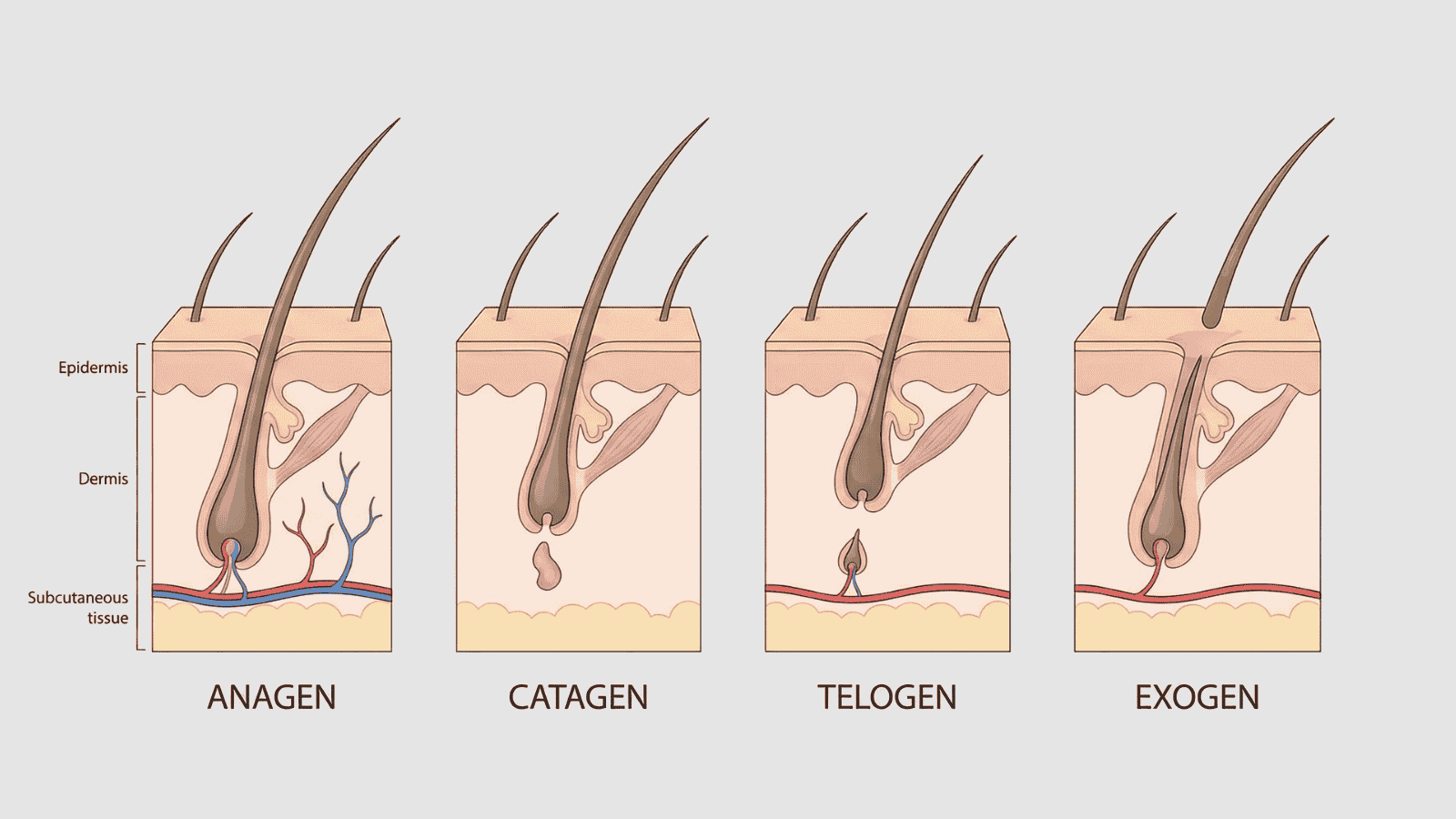
How Hair Grows: The Hair Growth Cycle (Simple Explanation)
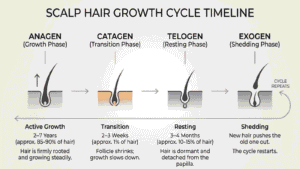
Each strand of hair goes through repeating phases. At any moment, different hairs on your head are in different phases—this is normal.
1) Anagen (Growth Phase)
- This is when hair actively grows.
- It can last years for scalp hair.
- The longer your anagen phase, the longer your hair can potentially grow.
2) Catagen (Transition Phase)
- A short “pause” phase lasting a few weeks.
- Growth slows and the follicle prepares to rest.
3) Telogen (Resting Phase)
- Hair is not actively growing.
- Lasts around a few months for many people.
4) Exogen (Shedding Phase)
- The old hair releases and sheds to make room for new growth.
- Seeing hairs in your brush or shower is often part of this phase.
What’s normal? Some daily shedding can be normal, but major increases in shedding deserve attention.
- Hair Shedding vs Hair Loss: How to Tell the Difference
Hair Breakage vs Shedding: How to Tell What’s Really Happening
How Fast Does Hair Grow (On Average)?
Most people’s scalp hair grows roughly around 1–1.5 cm per month (varies by person). But you may not see length changes if:
- hair is breaking as fast as it grows,
- shrinkage (curl patterns) hides length,
- shedding is elevated.
Key idea: “Hair growth” and “length retention” are not the same thing. You need both.
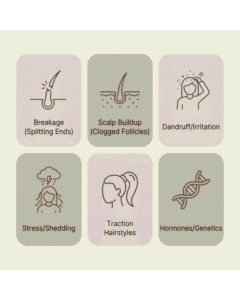
Why Hair Looks Like It’s Not Growing (Most Common Reasons)
1) Breakage (the #1 hidden reason)
Hair can be growing at the scalp but breaking off at the ends due to:
- heat styling
- chemical processing
- rough detangling
- dryness/brittleness
- tight hairstyles
What helps: conditioning, gentle detangling, trimming split ends, reducing friction.
Hair Breakage vs Shedding: How to Tell What’s Really Happening
2) Scalp buildup (product, oil, dead skin)
Buildup can make the scalp feel itchy or oily and may interfere with a consistent routine.
What helps: a balanced wash schedule + occasional clarifying (not overdoing it).
3) Dandruff or scalp inflammation
Flaking, itching, and irritation can disrupt scalp comfort and routine consistency.
What helps: treat the scalp condition first; keep routines gentle.
4) Stress, illness, or major life changes (shedding spikes)
Big stressors (including illness, surgery, major weight change) can trigger increased shedding that’s often noticed months later.
What helps: time, supportive scalp care, gentle handling, and addressing the underlying trigger when possible.
5) Hormones and genetics (including pattern thinning)
Some thinning patterns are influenced by genetics and hormones (like androgens/DHT). This often needs targeted strategies and sometimes professional guidance.
If thinning is progressing, a dermatologist can help identify the type and best evidence-based options.
6) Traction (tight styles pulling the hairline)
Consistent tension (tight ponytails, braids, extensions, glued wigs) can stress edges and hairline.
What Actually Helps Hair Growth (Realistic, Repeatable)
There’s no instant fix—but there are proven, practical ways to support healthier growth conditions.
1) Build a scalp routine you can follow consistently
Consistency matters more than “perfect.” A simple routine usually beats an overly complicated one.
- Shop Scalp + Hair Growth Products
2) Keep the scalp clean and balanced
- Wash often enough to avoid buildup (frequency varies by scalp type).
- Avoid harsh scratching; treat flakes/itch appropriately.
- If your scalp is sensitive, introduce new products one at a time.
3) Use leave-in/scalp treatments correctly
If you sell a hair growth serum, educate readers to apply it the right way.
How to Use a Hair Growth Serum (Step-by-Step Routine + Timeline)
4) Protect length (length retention)
If your goal is longer hair, protecting ends is essential:
- reduce heat and friction
- satin/silk pillowcase or bonnet
- gentle detangling tools + technique
- conditioner/masks for slip and strength
5) Nutrition basics (don’t guess)
Hair is sensitive to major nutrient gaps (like iron, vitamin D, protein). Supplements can help if you’re deficient, but “mega-dosing” isn’t always helpful.
If you suspect a deficiency, consider testing with a professional rather than guessing.
Hair Growth Products: What to Look For (Without Hype)
Different product types support different goals:
Scalp serums
Best for: targeting the scalp environment + routine consistency.
Look for: scalp-friendly humectants/soothers, lightweight feel, easy application.
Oils
Best for: reducing friction, sealing moisture, scalp massage slip (for some).
Note: heavy oiling can worsen buildup for some scalps.
Shampoos/cleansers
Best for: scalp hygiene, removing buildup, managing flakes/oil.
Masks/conditioners
Best for: strength and less breakage (length retention).
Hair growth ingredients guide
A Simple Weekly Hair Growth Routine (Example)
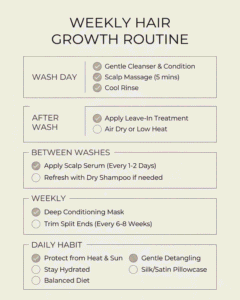
Adjust based on your scalp type and hair texture.
- Wash day (1–3x/week): cleanse scalp, condition lengths
- After wash: apply leave-in + (optional) scalp serum
- Between washes (3–6x/week): apply scalp serum as directed; light scalp massage
- Weekly: assess buildup; clarify only when needed
- Daily habit: protect hair from friction (sleep protection, gentle styling)
- Shop Hair Growth Serum
- Shop Shampoo / Scalp Cleanser
FAQs
Hair Growth : How Hair Grows, Why It Stops, and What Helps
- How long does it take to see hair growth results?Hair grows slowly. Many people track changes over 8–12+ weeks. Photos in the same lighting help.
- Is shedding always a bad sign?Not always—some shedding is normal. A sudden increase, patchy loss, or scalp symptoms should be evaluated.
- Should I oil my scalp for growth?Some people like oiling; others get buildup or irritation. If you oil, use small amounts and keep scalp cleansing consistent.
- Do scalp massages help?They can help with product distribution and routine consistency. Use gentle pressure—no scratching.
Summary
- Hair grows in phases (anagen → catagen → telogen → shedding).
- “Not growing” is often breakage, buildup, or shedding changes.
- What helps most is a consistent routine: scalp care + correct product use + length protection.
End-of-post CTA (best final link):
- Take the next step: Shop our Hair Growth Collection
- Learn next: How to Use Hair Growth Serum (Step-by-Step)
How to Use a Hair Growth Serum (Step-by-Step Routine + Timeline)